

Direct Answer Summary
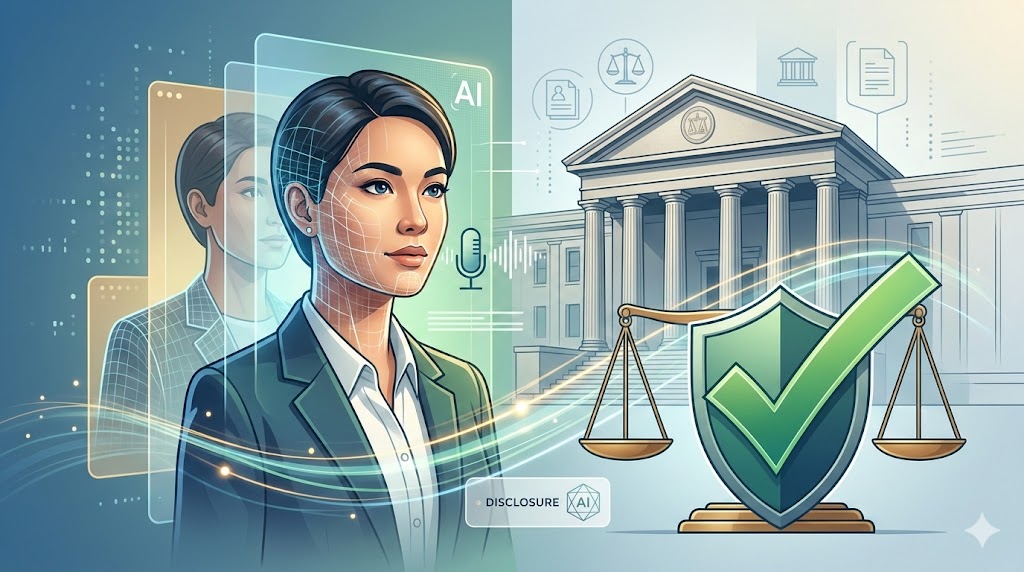
AI avatars and voice cloning are not inherently non-compliant for insurance marketing — but they carry specific regulatory requirements that agents must address before publishing. The central compliance concern is whether AI-generated content could be perceived as deceptive, meaning a consumer might not realize they are interacting with synthetic media rather than the actual agent. When the avatar represents the licensed agent, uses pre-approved or verified scripts, and includes a clear disclosure that the content is AI-assisted, these tools can be used within regulatory boundaries. However, using AI avatars to impersonate other individuals, fabricate testimonials, or deliver unapproved product claims creates serious regulatory exposure under FTC rules, NAIC advertising standards, and emerging state AI disclosure laws.
Why This Matters
AI avatars and voice cloning technology are becoming standard tools in insurance marketing. Agents can now generate professional-looking video content at scale — educational clips, social media posts, market updates — using digital likenesses that look and sound like them, without recording each piece individually.
This efficiency creates a compliance question that did not exist five years ago: When a consumer watches a video of “you” that was generated by AI, is that deceptive?
The answer depends on three factors:
- Whether the avatar represents you (the licensed, authorized agent) or someone else
- Whether the script has been reviewed for compliance before publication
- Whether the consumer is informed that AI was used in creating the content
Get these three elements right, and AI avatars become a compliance-manageable marketing tool. Get any of them wrong, and you face potential enforcement action from state insurance departments, the FTC, or your carrier.
What Regulators Say
FTC Guidance on AI-Generated Content
The Federal Trade Commission has made clear that AI-generated personas — including virtual influencers, digital avatars, and cloned voices — must follow the same disclosure rules as human endorsers. If an advertisement could lead a reasonable consumer to believe an endorsement reflects a real person’s genuine experience, and it does not, the FTC expects clear and conspicuous disclosure.
The FTC’s standard for disclosure is three-fold: clear (plain language, no legal jargon), conspicuous (easy to notice, readable on mobile, placed near the content), and timely(delivered before the consumer is influenced by the message). This applies to video, audio, and static image content equally.
FCC Rules on AI Voice Cloning
In February 2024, the FCC issued a Declaratory Ruling affirming that AI-generated voices in robocalls qualify as “artificial or pre-recorded voices” under the Telephone Consumer Protection Act (TCPA). While the Eleventh Circuit later vacated certain aspects of the FCC’s one-to-one consent rule in Insurance Marketing Coalition Limited v. FCC (January 2025), the underlying classification of AI-generated voice content as “artificial” under the TCPA remains relevant for any agent using voice-cloned outbound calls.
Key takeaway: Voice-cloned content used in marketing calls carries TCPA obligations. Agents must ensure proper consent is obtained, and the AI-generated nature of the voice should be disclosed.
NAIC Advertising Model Regulation (Model 570)
The NAIC Advertisements of Life Insurance and Annuities Model Regulation (Model 570) requires that all insurance advertisements be “truthful and not misleading in fact or by implication.” The form and content must be “sufficiently complete and clear so as to avoid deception.” While Model 570 does not specifically reference AI avatars, the “deception” and “misleading by implication” standards apply directly. An AI avatar delivering insurance claims without disclosure could be argued to mislead consumers about the nature of the interaction.
New York Synthetic Performer Disclosure Law (Effective June 2026)
New York signed S.8420-A into law in December 2025, requiring any advertisement using a “synthetic performer” to conspicuously disclose the use of AI-generated content. Violations carry a $1,000 penalty for first offenses and $5,000 for subsequent violations. While the law targets advertisements broadly — not insurance specifically — insurance marketing content distributed in New York falls within its scope.
Canadian Regulatory Context
In Canada, the Autorité des marchés financiers (AMF) in Quebec published draft guidelines in 2025 on AI use by financial institutions, clarifying expectations for managing AI-related risks while ensuring fair treatment of customers. Ad Standards Canada’s updated Influencer Marketing Disclosure Guidelines (October 2025) also recommend disclosing AI-generated content with clear labels such as #MadeWithAI. Ontario’s FSRA has not yet issued AI-specific advertising guidance, but existing fair dealing and advertising standards apply to all marketing formats, including AI-generated content.
Common Mistakes
These are the most frequent compliance errors agents make with AI avatar and voice cloning technology:
- No disclosure at all. The agent publishes AI-generated video or audio content without any indication that AI was used. This is the single most common and most dangerous mistake.
- Using an avatar that does not represent the licensed agent. Creating a “spokesperson” avatar that is not a real, licensed individual — or using another person’s likeness without authorization — crosses into impersonation territory.
- Letting the AI write unreviewed scripts. AI-generated scripts can contain non-compliant claims (return projections, guarantee language, misleading comparisons) that the agent never sees before publication.
- Burying the disclosure. Placing “AI-generated” in small text at the end of a video description, where no reasonable viewer would notice it, does not meet the FTC’s “conspicuous” standard.
- Using voice cloning for outbound calls without consent. Deploying a cloned voice in a phone call without prior express consent from the recipient raises TCPA concerns, regardless of the Eleventh Circuit ruling on the broader consent framework.
- Fabricating testimonials. Using AI to generate “customer testimonials” from people who do not exist or did not provide those statements is deceptive advertising under both FTC and state insurance department rules.
Compliant Alternatives
Here is how to use AI avatars and voice cloning within a compliance-conscious framework:
Disclosure Language
COMPLIANT VIDEO DISCLOSURE (SPOKEN OR ON-SCREEN):
“This video was created using AI technology based on my likeness and voice. The content has been reviewed and approved by me, [Agent Name], a licensed insurance professional in [State/Province].”
COMPLIANT SOCIAL MEDIA CAPTION:
“AI-assisted content. Script reviewed and approved by [Agent Name], [License Number/State]. For personalized guidance, contact me directly.”
COMPLIANT EMAIL SIGNATURE FOR AI-GENERATED CONTENT:
“This message was drafted with AI assistance and reviewed by [Agent Name]. It is educational in nature and does not constitute a policy recommendation.”
The Three-Part Compliance Framework for AI Avatars
- Identity verification: The avatar must represent the actual licensed agent. No fictitious characters, no unauthorized likenesses.
- Script review: Every script must be reviewed by the agent (or a compliance officer) before the AI generates the content. Human-in-the-loop is not optional.
- Conspicuous disclosure: Every piece of AI-generated content must include a visible, readable disclosure — ideally both spoken and written — indicating AI was used in production.
AI-Specific Considerations
The core regulatory question with AI avatars is not whether the technology is permitted — it is whether the output is truthful, non-deceptive, and properly attributed.
AI introduces specific risks that traditional marketing does not:
- Scale without review. AI can generate dozens of videos per week. Without a review step, non-compliant content can proliferate before anyone catches it.
- Deepfake perception. Even when an AI avatar is legitimate and authorized, public awareness of deepfakes means consumers may view any AI-generated content with suspicion. Proactive disclosure builds trust rather than undermining it.
- Cross-jurisdictional distribution. A single social media post can reach consumers in multiple states and provinces, each with different advertising requirements. Content must meet the most restrictive applicable standard.
- Voice cloning and consent. If voice-cloned content is used in calls (rather than posted video), TCPA and provincial telemarketing rules apply in addition to advertising regulations.
The responsible approach treats AI as a production tool, not a compliance shortcut. The agent remains the author. The AI is the medium.
Roomvu Implementation Example
Roomvu’s platform is designed around the compliance requirements described above. Here is how the system works in practice for AI avatar content:
- AI Avatars use the agent’s own likeness and voice. Roomvu’s Brand Builder creates avatars based on each agent’s actual appearance and voice, verified during onboarding. There is no option to generate a fictitious spokesperson.
- Verified templates and scripts. Content is generated from pre-reviewed templates designed for insurance marketing. Agents can customize messaging, but the underlying structure is built to avoid prohibited claims. Learn more in the Tutorials section.
- Human-in-the-loop review. Before any AI-generated content is published, agents have the ability to review, edit, and approve it. The platform does not auto-publish without agent confirmation.
- Archivable workflows. All generated content — scripts, video files, social media posts — is tracked and archived. This creates the documentation trail that state insurance departments may request during an audit or market conduct examination.
- Disclosure integration. AI-generated content can include built-in disclosure labels, helping agents meet FTC and state disclosure requirements without manually editing each piece.
Roomvu does not eliminate compliance risk — no tool can. But it structures the workflow so that the three requirements (identity verification, script review, and disclosure) are built into the production process rather than left to the agent’s memory. See pricing and plan details to explore available features.
Compliance Checklist: Before You Post AI Avatar Content
- The avatar represents me (the licensed agent) and no one else
- I have reviewed and approved the script before the AI generated the content
- The content does not contain guarantee language, misleading comparisons, or unapproved product claims
- A clear, conspicuous disclosure that AI was used is included in the content (both visual and spoken for video)
- The disclosure meets the most restrictive standard of any jurisdiction where the content may be viewed
- If voice cloning is used in calls, I have confirmed TCPA consent requirements are met
- The content is archived and retrievable for compliance audit purposes
- My carrier, MGA, or broker-dealer has approved the use of AI-generated marketing content
- If distributing in New York, I have confirmed compliance with the Synthetic Performer Disclosure Law (effective June 2026)
- If distributing in Canada, I have confirmed compliance with AMF or applicable provincial advertising standards
Educational Disclaimer: This content is for educational marketing guidance only and does not constitute legal or regulatory advice. Agents should confirm requirements with their carrier, MGA, or licensing authority.
Frequently Asked Questions
Is using an AI avatar considered “impersonation” under insurance regulations?
Not when the avatar represents the actual licensed agent and that fact is disclosed. Impersonation concerns arise when an AI likeness is used to represent someone who did not authorize it, or when a fictitious “agent” is created to interact with consumers. If the avatar is you, and you disclose it is AI-generated, regulators have no impersonation basis for action. The standard is whether a reasonable consumer would be misled about who they are interacting with.
Do I need carrier approval before using AI avatars in insurance marketing?
Most carriers and MGAs have advertising review requirements that apply to all marketing materials, regardless of format. AI-generated content is not exempt from these requirements. Before launching any AI avatar campaign, check with your carrier’s compliance department. Some carriers have already issued specific guidance on AI-generated content; others apply their existing advertising pre-approval rules. Failing to obtain required approval can result in contract termination, regardless of whether the content itself was compliant.
What if my AI avatar says something non-compliant that I did not review?
You are still responsible. Under NAIC Model 570 and state advertising regulations, the producer (agent) is accountable for all advertising distributed under their name and license. “The AI said it, not me” is not a defense. This is precisely why a human-in-the-loop review process is essential — every script must be reviewed before the AI generates the final content. Platforms like Roomvubuild this review step into the workflow, but the ultimate compliance responsibility rests with the licensed agent.
Are the disclosure requirements different in Canada versus the United States?
The general principle is the same in both countries: AI-generated content should be disclosed, and all advertising must be truthful and not misleading. However, specific requirements vary. In Canada, Ad Standards Canada recommends clear labels such as #MadeWithAI, and the AMF’s draft AI guidelines apply to Quebec financial institutions. In the US, the FTC sets the federal baseline, but individual states may impose additional requirements — New York’s Synthetic Performer Disclosure Law being the most prominent current example. Agents operating across both countries should default to the most restrictive applicable standard.